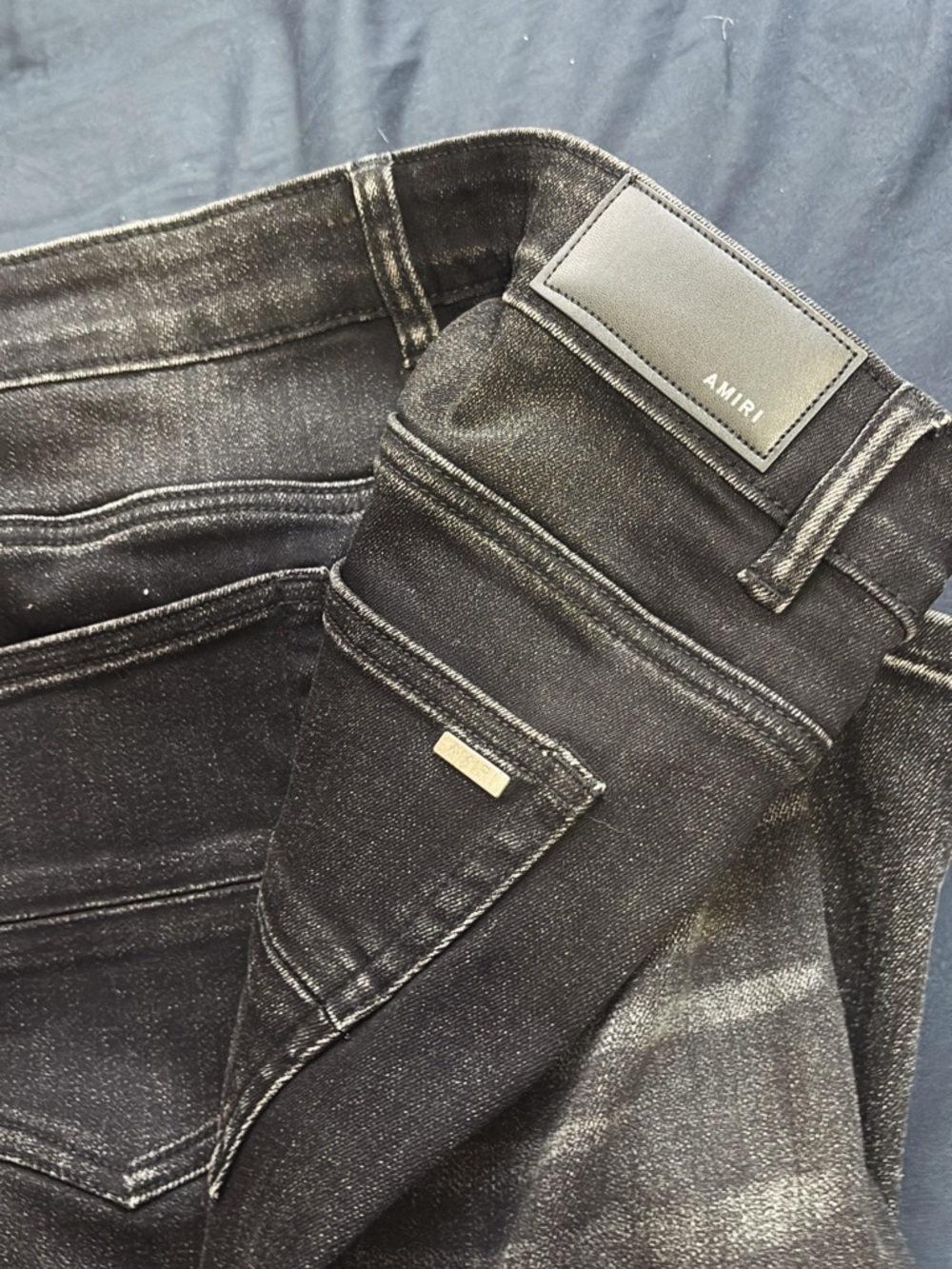
A Los Angeles luxury house, AMIRI is anchored by hand-finished denim, skeleton-appliqué sneakers and heavy graphic jersey. Paris hosts two of its shows a year, though the company stays American, with an American working studio. Its identity rests on one idea: take jeans apart, then rebuild in plain sight them with leather, bandana print or jacquard. Readers arrive here from different kinds of searches. The phrase amiri clothing points at the house, amiri jeans at the denim, amiri hoodie at the fleece and amiri men at the menswear the label began with. What follows is the documented version, with the claims that fail checking marked.
Who founded the house, and what is actually documented
The founder and creative director is Mike Amiri, an American designer of Iranian descent. One phrase is common to his CFDA profile and the brand’s about page, which is that he began hand-crafting unique stage pieces for legendary Los Angeles performers. That is all either source puts on record, so rock clients named in retail editorial are reported rather than confirmed. A press release dated 3 December 2014 credits him with over ten years in luxury and projects for Helmut Lang, J Brand and RRL, which is publicity rather than confirmation. The same release announced his appointment as head designer of ready-to-wear and accessories at Buscemi, which almost every profile leaves out. The law-school backstory has no primary source online, and his full legal name is documented nowhere either.
A founding year with two citable answers
A date of 2014 is given by most sources, from the brand’s about page and the CFDA to its Italian minority investor and the main reference summaries. The December 2014 press release differs, placing the founding in 2013 in partnership with the retailer Maxfield. Both are citable, so careful writing should not quietly pick one. Safest is to say that the house dates itself to 2014 while the earliest press release dates it to 2013. Nobody disputes the launch, an exclusive capsule carried through the Los Angeles concept store Maxfield. The release goes amari shoes further still and calls Maxfield a founding partner rather than the first stockist.
Ownership, leadership and the money question
Mike Amiri is the majority owner, so the house is still run independently day to day. A minority stake was taken in 2019, on undisclosed terms, by the Italian group OTB, which is chaired by Diesel founder Renzo Rosso. Because the percentage has never been made public, any published figure is guesswork. Adrian Ward-Rees became chief executive on 1 April 2023 after senior roles at Burberry and Dior Menswear, though whether he still holds the post is unconfirmed. That widely quoted $300 million sales line is a founder statement relayed by the press rather than an audited figure. Figures for valuation and net worth are passed on without sourcing, and repeating them is a mistake.
How big the retail network really is
The fix here is to separate owned stores from wholesale doors, because this is the most mis-stated area in AMIRI coverage. On the brand’s own retail-locations listing there are roughly 33 boutiques, several marked as coming soon, and trade reporting counts about 31 stand-alone stores in 2026 after Milan. The wholesale side is another matter again: around 150 luxury accounts, roughly 400 points of sale, and more than 160 retailers carrying the label. Much larger store counts fold those wholesale doors into owned stores and should not be repeated. The first permanent store came in 2020, on Rodeo Drive in Beverly Hills. Milan later became the first permanent European store, and London followed.
United States: Beverly Hills, Los Angeles, Costa Mesa, Las Vegas, Dallas, Chicago, Atlanta, Miami, New York
Europe: Milan, London, Paris, St Tropez
Middle East and Africa: Dubai, Riyadh, Cape Town
Asia and Latin America: Shanghai, Nanjing, Tokyo, Osaka, Nagoya, New Delhi, Mexico City
Denim, where the house identity lives
The label began in denim and is still anchored there, and repair is the operative verb. Hand-distressing comes first, then the jeans are visibly rebuilt with contrast material, which leaves a finish that looks irregular rather than machine-uniform. MX1, Stack, Thrasher and Shotgun are the fits in circulation, joined by roomier Carpenter, Baggy and MA Fit cuts. MX2 is a genuine model name, but its collection pages returned no live products in 2026 checks, so it reads as archive-leaning. The only MX3 is a women’s Baggy MX3, a no-waistband motocross hybrid observed at $990, rather than a men’s high-destruction jean. Bandana and Crystal are treatments that run across those fits rather than fits in their own right, which makes MX1 Bandana and Crystal Thrasher the correct forms.
Footwear and the bones motif
Skel Top Low is what the house calls its signature sneaker in its own product copy. A leather and suede basketball silhouette sits on a two-tone rubber sole here, carrying hand-cut bone appliqués, observed at $650. The Skel Court is a different shoe, a canvas retro-court style with the same bones motif, high-top observed at $690. Stars Court uses that silhouette but swaps bones for star appliqués, refreshed for Pre-Spring 2026. MA-1 in this house is a sneaker observed at $799 and not a bomber jacket, while elsewhere MA-1 is the generic military bomber designation. The founder’s initials give MA, which heads MA Bar, MA Core, MA Quad, MA Fit and MA Skyline; the Ryder Boot sits at $1,090 to $1,290.
The jersey, the shirting and the outerwear
The soft goods carry the same skeleton motif that defines the sneakers. Confirmed pieces include the Bones Oversized Hoodie, Bones Fleece Zip Hoodie, Bones Stacked Hoodie and a Bones flannel overshirt. As the plain option, the MA Core Logo Hoodie is a cotton pullover with the MA icon and core logo, called a normal fit and observed at $650. People constantly conflate the MA Core Logo Tee and the MA Bar Logo Tee, yet they are different products from different countries. Far from a seasonal add-on, flannel is a founding pillar, and the MA Quad Bleached Flannel is observed at $1,290. Outerwear reaches higher with wool and leather varsity jackets and denim work jackets on the same repair logic, though no flagship bomber is supported.
Where AMIRI is genuinely made
Origin varies by style, so the claim that everything is made in Los Angeles is false. The United States is the origin for the MX1 jean, the Stack jean and the MA Core Logo Hoodie. The MA Bar Logo Tee is specifically made in Los Angeles, which covers one product rather than the range. Italy is where the MA Core Logo Tee is made, and that surprises anyone assuming the jersey follows the denim. Footwear, the Skel Top Low and the Skel Court Hi included, is made in Vietnam. If a jean is labelled made in Italy, or a Skel-Top labelled made in the United States, look harder at the piece.
Observed prices, and discounting that is structural
Each figure below comes from an observed market listing read in 2026 rather than an official price list, and prices move. Read them as bands, not fixed points. Tees open around $425, core jeans fall between roughly $750 and $1,100, hoodies go from about $650 into the $900s, and sneakers cluster between $620 and $800. Worked outerwear such as varsity jackets reaches $1,800 to $2,300 and above at list. Rather than being exceptional, discounting is structural, and in-season reductions of 40 to 70 percent appear at authorised multi-brand retailers and off-price channels. The sale floor caps what the secondary market will pay, so resale on standard pieces sits below retail.
Piece
Price observed
Detail
Stack
$750
Entry point into core denim
MX1
$1,090
Repair in pleated ovine leather
Women’s Baggy MX3 jean
$990
Motocross hybrid, no waistband
The MA Core Logo Hoodie
$650
Cotton, normal fit
Skel Top Low
$650
Signature sneaker per house copy
The Skel Court Hi
$690
Canvas court silhouette
MA-1 sneaker
$799
Sneaker, not a bomber jacket
The Ryder Boot
$1,090 to $1,290
Leather, suede or python-embossed
Claims to treat with caution
A surprising share of published AMIRI copy repeats the same errors. The founding year gets presented as settled although two sources disagree, store counts are inflated because wholesale doors are folded into owned boutiques, and revenue is quoted as audited when it is really a founder statement. The most persistent product invention is a tiered MX ladder in which each number means heavier destruction, which reads like search-optimised filler. Promoting treatments to fits, merging footwear names and describing the MA-1 sneaker as a jacket are all common. Last of all, there is no official outlet, whether online or physical. A July 2021 federal complaint carries the company’s statement that it does not have an AMIRI outlet store and has never authorised any person or business to operate one.
Check whether any store count refers to owned boutiques or to wholesale doors.
Named rock clients are secondary-press reports, not claims the brand makes.
Read Bandana and Crystal as treatments, and MX1, Stack, Thrasher and Shotgun as fits.
Confirm the origin on the label, since it varies from style to style.
Any resale offer should be measured against authorised sale prices.
Questo sito e gli strumenti di terze parti in esso integrati trattano dati personali (es. dati di navigazione o indirizzi IP) e fanno uso di Cookie, Pixel, Tags o altri identificatori necessari per il funzionamento e per il raggiungimento delle finalità descritte nella cookie policy, tra cui il miglioramento delle funzionalità del sito e la pubblicità personalizzata. Cliccando sul pulsante Accetta Tutti dichiari di accettare l'utilizzo di queste tecnologie. In alternativa puoi personalizzare le tue scelte tramite l'apposito pulsante. Scopri di più e personalizza.
Vaše nastavitve privolitve
Naslednja plošča vam omogoča, da izrazite svoje želje glede soglasja za tehnologije sledenja, ki jih uporabljamo za ponujanje funkcionalnosti in izvajanje spodaj opisanih dejavnosti. Za dodatne informacije o uporabnosti in delovanju teh orodij za sledenje si oglejte politiko piškotkov. Svoje izbire lahko kadar koli pregledate in spremenite.
vedno omogočeno
Potrebni piškotki:
Potrebni piškotki omogočajo, da spletno mesto pravilno deluje, na primer dostop do zaščitenih območij ali trenutnega jezika. Stran ne more pravilno delovati brez teh piškotkov.
Provider
Nome cookie
Durata (giorni)
Finalità
GestionaleAuto.com
PHPSESSID
seja
Ta piškotek je izviren za aplikacije PHP. Piškotek se uporablja za shranjevanje in identifikacijo edinstvenega ID-ja seje uporabnikov za namene upravljanja uporabniške seje na spletnem mestu. Piškotek je sejni piškotek in se izbriše, ko so vsa okna brskalnika zaprta.
GestionaleAuto.com
qtrans_front_language
365
Ta piškotek nastavi vtičnik qTranslate WordPress. Piškotek se uporablja za upravljanje želenega jezika obiskovalca.
GestionaleAuto.com
cookiesDirective
182
Ta piškotek spremlja nastavitve glede uporabe piškotkov na spletnem mestu.
GestionaleAuto.com
cookiesDirective
seja
Ta piškotek spremlja nastavitve glede uporabe piškotkov na spletnem mestu, samo za trenutno sejo, ker uporabnik zapre pasico s pravilnikom o piškotkih, ne da bi sprejel ali zavrnil kategorije piškotkov.
GestionaleAuto.com
ga_logged_user
7
Ta piškotek identificira uporabnika, ki je prijavljen na območju trgovcev.
GestionaleAuto.com
ga_logged_user_data
7
Ta piškotek vsebuje nastavitve (napredne različice) območja trgovcev za določenega prijavljenega uporabnika.
GestionaleAuto.com
ga_upload3_b2b_orders
90
Ta piškotek vsebuje vozila, ki so prisotna v nakupovalnem vozičku (napredne različice) Trgovskega območja.
GestionaleAuto.com
lead_popup_*
7
Ta piškotek onemogoči prikaz pojavnega okna potencialne stranke, če je nastavljeno, da se prikaže samo enkrat.
GestionaleAuto.com
lead_popup_*
30
Ta piškotek onemogoči prikaz pojavnega okna potencialne stranke, če je bila potencialna stranka dejansko zbrana.
GestionaleAuto.com
ga_upload3_searching
seja
Ta piškotek upravlja prikaz iskalnega polja vozil za mobilne naprave.
GestionaleAuto.com
ga_ecommerce_quote
seja
Ta piškotek vsebuje brezplačne ocenjevalne podatke, ki jih je treba ponovno uporabiti v razdelku »Nakup prek spleta« na listu vozila (če je aktiven).
Alberto
test-alberto-1
10
Test Alberto
Stefano
Stefano Needed
seja
descrizione
Stefano 2
Stefano 2
vztrajno
desc
Stefano3
Stefano3
vztrajno
slov
Nastavitveni piškotki:
Prednostni piškotki vam omogočajo shranjevanje informacij, ki izboljšujejo uporabo spletnega mesta, kot so vaši najljubši avtomobili.
Provider
Nome cookie
Durata (giorni)
Finalità
GestionaleAuto.com
ga_upload3_bookmarks
90
Ta piškotek vsebuje priljubljena vozila, izbrana od uporabnikov.
GestionaleAuto.com
ga_bookmarks
90
Ta piškotek vsebuje priljubljena vozila, ki jih je izbral uporabnik (dvojnik zaznamkov ga_*_, ki jih sistem za predpomnjenje uporablja iz tehničnih razlogov).
GestionaleAuto.com
ga_upload3_comparables
90
Ta piškotek vsebuje trenutno primerjana priljubljena vozila.
GestionaleAuto.com
ga_upload3_rental_comparables
90
Ta piškotek vsebuje trenutno primerjana priljubljena vozila za najem.
io
test
25
Test cookie custom
Piškotki za izboljšanje uporabniške izkušnje:
Piškotki za izboljšanje uporabniške izkušnje vam omogočajo, da spletno mesto uporabljate na najboljši način, na primer prek klepeta.
Provider
Nome cookie
Durata (giorni)
Finalità
Zendesk
__zlcstore
vztrajno
Ta piškotek je potreben za zagotovitev delovanja funkcije klepeta v ustreznem polju na spletnem mestu.
Zendesk
ZD-buid
vztrajno
Ta piškotek vsebuje edinstven ID, ki identificira uporabnika v primeru ponavljajočih se obiskov.
Zendesk
ZD-store
vztrajno
Ta piškotek beleži, ali je bil uporabniku spletnega mesta prikazan Zendesk Answer Bot Self Service Assistant.
Zendesk
ZD-suid
vztrajno
Ta piškotek vsebuje edinstven ID, ki identificira uporabniško sejo.
Zendesk
__cfruid
seja
Ta piškotek je del storitev, ki jih ponuja Cloudflare, vključno z uravnoteženjem obremenitve, dostavo vsebine spletnega mesta in povezavo DNS za operaterje spletnih mest.
Zendesk
AWSALBCORS
6
Ta piškotek beleži, katera strežniška gruča služi obiskovalcu. To se uporablja v kontekstu uravnoteženja obremenitve, da bi optimizirali uporabniško izkušnjo.
Zendesk
__zlcmid
365
Ta piškotek ohranja status uporabnika na različnih straneh spletnega mesta.
Zendesk
zte#
seja
Ta piškotek shrani ID klepeta Zopim v živo, ki prepozna napravo ob večkratnih obiskih med klepetalnico.
Analitični piškotki:
Analitični piškotki zagotavljajo anonimne statistike o obiskih različnih strani spletnega mesta.
Provider
Nome cookie
Durata (giorni)
Finalità
GestionaleAuto.com
ga_comparables
90
Ta piškotek vsebuje trenutno primerjana priljubljena vozila (dvojnik ga_*_comparables, ki ga sistem za predpomnjenje uporablja iz tehničnih razlogov).
GestionaleAuto.com
ga_rental_comparables
90
Ta piškotek vsebuje trenutno primerjana priljubljena vozila za najem (dvojnik ga_*_rental_comparables, ki ga sistem za predpomnjenje uporablja iz tehničnih razlogov).
GestionaleAuto.com
ga_tracker
1
Ta piškotek določa seznam obiskanih vozil.
GestionaleAuto.com
ga_view_counter
1
Ta piškotek definira seznam vozil s štetjem obiskov.
Google
_ga
730
Ta piškotek, ki ga namesti Google Analytics, izračuna podatke o obiskovalcih, sejah in oglaševalskih akcijah ter spremlja tudi uporabo spletnega mesta za analitično poročilo spletnega mesta. Piškotek shranjuje podatke anonimno in dodeli naključno ustvarjeno številko za prepoznavanje edinstvenih obiskovalcev.
Google
_ga_#
730
Ta piškotek uporablja Google Analytics za zbiranje podatkov o tem, kolikokrat je uporabnik obiskal spletno mesto, ter podatkov za prvi in zadnji obisk.
Google
_gid
1
Ta piškotek namesti Google Analytics, piškotek _gid shranjuje informacije o tem, kako obiskovalci uporabljajo spletno mesto, hkrati pa ustvarja analitično poročilo o uspešnosti spletnega mesta. Nekateri zbrani podatki vključujejo število obiskovalcev, njihov vir in strani, ki jih obiščejo anonimno.
Google
_gat
1
Ta piškotek uporablja Google Analytics za omejevanje pogostosti zahtev.
Google
_gat_gaTracker
1
Ta piškotek se uporablja za zmanjšanje stopnje zahtev.
Google
collect
seja
Ta piškotek se uporablja za pošiljanje podatkov v Google Analytics o napravi in vedenju uporabnika. Sledi uporabniku po napravah in trženjskih kanalih.
Google
_dc_gtm_UA-#
1
Ta piškotek uporablja Google Upravitelj oznak za nadzor nalaganja skriptne oznake Google Analytics.
Marketinški piškotki:
Tržni piškotki spremljajo spletna mesta, ki jih obiskujejo uporabniki, in omogočajo prikaz ustreznejših oglasov glede na nastavitve obiska.
Provider
Nome cookie
Durata (giorni)
Finalità
GestionaleAuto.com
utm_source
seja
Ta piškotek opredeljuje entiteto oglaševalca oglaševalske akcije za ponovno trženje.
GestionaleAuto.com
utm_medium
seja
Ta piškotek opredeljuje medij, ki se uporablja za ponovno trženje (npr. glasilo).
GestionaleAuto.com
utm_campaign
seja
Ta piškotek določa ime oglaševalske akcije za ponovno trženje.
GestionaleAuto.com
utm_term
seja
Ta piškotek opredeljuje ključno besedo, ki je povzročila klik v oglaševalski akciji za ponovno trženje.
GestionaleAuto.com
utm_content
seja
Ta piškotek opredeljuje razlikovanje med različnimi subjekti, ki so ustvarili klik v kampanji za ponovno trženje (npr. dve povezavi v istem e-poštnem sporočilu).
Google
IDE
365
Ta piškotek uporablja Google DoubleClick za beleženje in poročanje o uporabnikovih dejanjih na spletnem mestu po ogledu ali kliku enega od oglaševalčevih oglasov, da bi izmeril učinkovitost oglasa in uporabniku predstavil ciljano oglaševanje.
Google
pagead/landing
seja
Ta piškotek zbira podatke o vedenju obiskovalcev z več spletnih mest, da bi predstavil ustreznejše oglase. To spletni strani tudi omogoča, da omeji, kolikokrat je obiskovalcu prikazan isti oglas.
Google
test_cookie
1
Ta piškotek se uporablja za preverjanje, ali brskalnik uporabnika podpira piškotke.
Google
ads/ga-audiences
seja
Ta piškotek uporablja Google AdWords za ponovno pritegnitev obiskovalcev, za katere je verjetno, da se bodo na podlagi spletnega vedenja obiskovalca na spletnih mestih spremenili v stranke.
Google
_gcl_au
91
Ta piškotek uporablja Google AdSense za testiranje učinkovitosti oglaševanja na vseh spletnih mestih, ki uporabljajo njihove storitve.
Facebook
tr
seja
Ta piškotek uporablja Facebook za dostavo različnih oglaševalskih izdelkov, kot so ponudbe v realnem času tretjih oglaševalcev.
Facebook
_fbp
91
Ta piškotek nastavi Facebook za prikazovanje oglasov na Facebooku ali na digitalni platformi, ki jo poganja oglaševanje Facebook, po obisku spletnega mesta.
Facebook
fr
91
Ta piškotek nastavi Facebook, da uporabnikom prikaže ustrezne oglase s sledenjem vedenju uporabnikov po spletu, na spletnih mestih, ki imajo Facebook pixel ali Facebook socialni vtičnik.
Polna politika piškotkov
Lorem ipsum dolor sit amet, consectetur adipiscing elit. Donec placerat sagittis bibendum. Nam a interdum magna. Mauris ultricies egestas nunc nec dictum. Quisque non mattis augue. Suspendisse finibus, nulla nec placerat sodales, sapien tellus luctus tortor, eget faucibus massa mi vel odio. Ut nisi dui, faucibus sed fringilla vitae, luctus sit amet dui. Aenean ultricies risus ut quam volutpat posuere. Maecenas mi sapien, luctus eu diam et, tempor sollicitudin nibh. Morbi commodo massa at varius volutpat. Nam euismod malesuada augue at vestibulum.
Integer bibendum ipsum ac sapien aliquam, a ullamcorper nunc mollis. Morbi tempus in sem at luctus. Nullam orci orci, molestie at turpis fermentum, ultrices tincidunt enim. Aenean aliquet risus a faucibus gravida. Curabitur iaculis vestibulum ipsum, id euismod elit tincidunt sit amet. In porttitor sem non justo laoreet suscipit. Cras luctus eros vel erat fringilla auctor. Aenean sem magna, consectetur eget nunc sed, commodo tempor mauris. Etiam ut leo ex. Fusce felis lacus, lobortis sit amet sagittis et, interdum sit amet nisi. Praesent nec tellus lobortis, hendrerit purus ac, scelerisque leo. Curabitur lacinia tempus velit, eget fermentum arcu mollis vel. Morbi quis tortor magna. Proin maximus eget erat vitae rutrum. Aliquam efficitur at nulla a hendrerit.
Potrebni piškotki:
Potrebni piškotki omogočajo, da spletno mesto pravilno deluje, na primer dostop do zaščitenih območij ali trenutnega jezika. Stran ne more pravilno delovati brez teh piškotkov.
Provider
Nome cookie
Durata (giorni)
Finalità
GestionaleAuto.com
PHPSESSID
seja
Ta piškotek je izviren za aplikacije PHP. Piškotek se uporablja za shranjevanje in identifikacijo edinstvenega ID-ja seje uporabnikov za namene upravljanja uporabniške seje na spletnem mestu. Piškotek je sejni piškotek in se izbriše, ko so vsa okna brskalnika zaprta.
GestionaleAuto.com
qtrans_front_language
365
Ta piškotek nastavi vtičnik qTranslate WordPress. Piškotek se uporablja za upravljanje želenega jezika obiskovalca.
GestionaleAuto.com
cookiesDirective
182
Ta piškotek spremlja nastavitve glede uporabe piškotkov na spletnem mestu.
GestionaleAuto.com
cookiesDirective
seja
Ta piškotek spremlja nastavitve glede uporabe piškotkov na spletnem mestu, samo za trenutno sejo, ker uporabnik zapre pasico s pravilnikom o piškotkih, ne da bi sprejel ali zavrnil kategorije piškotkov.
GestionaleAuto.com
ga_logged_user
7
Ta piškotek identificira uporabnika, ki je prijavljen na območju trgovcev.
GestionaleAuto.com
ga_logged_user_data
7
Ta piškotek vsebuje nastavitve (napredne različice) območja trgovcev za določenega prijavljenega uporabnika.
GestionaleAuto.com
ga_upload3_b2b_orders
90
Ta piškotek vsebuje vozila, ki so prisotna v nakupovalnem vozičku (napredne različice) Trgovskega območja.
GestionaleAuto.com
lead_popup_*
7
Ta piškotek onemogoči prikaz pojavnega okna potencialne stranke, če je nastavljeno, da se prikaže samo enkrat.
GestionaleAuto.com
lead_popup_*
30
Ta piškotek onemogoči prikaz pojavnega okna potencialne stranke, če je bila potencialna stranka dejansko zbrana.
GestionaleAuto.com
ga_upload3_searching
seja
Ta piškotek upravlja prikaz iskalnega polja vozil za mobilne naprave.
GestionaleAuto.com
ga_ecommerce_quote
seja
Ta piškotek vsebuje brezplačne ocenjevalne podatke, ki jih je treba ponovno uporabiti v razdelku »Nakup prek spleta« na listu vozila (če je aktiven).
Alberto
test-alberto-1
10
Test Alberto
Stefano
Stefano Needed
seja
descrizione
Stefano 2
Stefano 2
vztrajno
desc
Stefano3
Stefano3
vztrajno
slov
Nastavitveni piškotki:
Prednostni piškotki vam omogočajo shranjevanje informacij, ki izboljšujejo uporabo spletnega mesta, kot so vaši najljubši avtomobili.
Provider
Nome cookie
Durata (giorni)
Finalità
GestionaleAuto.com
ga_upload3_bookmarks
90
Ta piškotek vsebuje priljubljena vozila, izbrana od uporabnikov.
GestionaleAuto.com
ga_bookmarks
90
Ta piškotek vsebuje priljubljena vozila, ki jih je izbral uporabnik (dvojnik zaznamkov ga_*_, ki jih sistem za predpomnjenje uporablja iz tehničnih razlogov).
GestionaleAuto.com
ga_upload3_comparables
90
Ta piškotek vsebuje trenutno primerjana priljubljena vozila.
GestionaleAuto.com
ga_upload3_rental_comparables
90
Ta piškotek vsebuje trenutno primerjana priljubljena vozila za najem.
io
test
25
Test cookie custom
Piškotki za izboljšanje uporabniške izkušnje:
Piškotki za izboljšanje uporabniške izkušnje vam omogočajo, da spletno mesto uporabljate na najboljši način, na primer prek klepeta.
Provider
Nome cookie
Durata (giorni)
Finalità
Zendesk
__zlcstore
vztrajno
Ta piškotek je potreben za zagotovitev delovanja funkcije klepeta v ustreznem polju na spletnem mestu.
Zendesk
ZD-buid
vztrajno
Ta piškotek vsebuje edinstven ID, ki identificira uporabnika v primeru ponavljajočih se obiskov.
Zendesk
ZD-store
vztrajno
Ta piškotek beleži, ali je bil uporabniku spletnega mesta prikazan Zendesk Answer Bot Self Service Assistant.
Zendesk
ZD-suid
vztrajno
Ta piškotek vsebuje edinstven ID, ki identificira uporabniško sejo.
Zendesk
__cfruid
seja
Ta piškotek je del storitev, ki jih ponuja Cloudflare, vključno z uravnoteženjem obremenitve, dostavo vsebine spletnega mesta in povezavo DNS za operaterje spletnih mest.
Zendesk
AWSALBCORS
6
Ta piškotek beleži, katera strežniška gruča služi obiskovalcu. To se uporablja v kontekstu uravnoteženja obremenitve, da bi optimizirali uporabniško izkušnjo.
Zendesk
__zlcmid
365
Ta piškotek ohranja status uporabnika na različnih straneh spletnega mesta.
Zendesk
zte#
seja
Ta piškotek shrani ID klepeta Zopim v živo, ki prepozna napravo ob večkratnih obiskih med klepetalnico.
Analitični piškotki:
Analitični piškotki zagotavljajo anonimne statistike o obiskih različnih strani spletnega mesta.
Provider
Nome cookie
Durata (giorni)
Finalità
GestionaleAuto.com
ga_comparables
90
Ta piškotek vsebuje trenutno primerjana priljubljena vozila (dvojnik ga_*_comparables, ki ga sistem za predpomnjenje uporablja iz tehničnih razlogov).
GestionaleAuto.com
ga_rental_comparables
90
Ta piškotek vsebuje trenutno primerjana priljubljena vozila za najem (dvojnik ga_*_rental_comparables, ki ga sistem za predpomnjenje uporablja iz tehničnih razlogov).
GestionaleAuto.com
ga_tracker
1
Ta piškotek določa seznam obiskanih vozil.
GestionaleAuto.com
ga_view_counter
1
Ta piškotek definira seznam vozil s štetjem obiskov.
Google
_ga
730
Ta piškotek, ki ga namesti Google Analytics, izračuna podatke o obiskovalcih, sejah in oglaševalskih akcijah ter spremlja tudi uporabo spletnega mesta za analitično poročilo spletnega mesta. Piškotek shranjuje podatke anonimno in dodeli naključno ustvarjeno številko za prepoznavanje edinstvenih obiskovalcev.
Google
_ga_#
730
Ta piškotek uporablja Google Analytics za zbiranje podatkov o tem, kolikokrat je uporabnik obiskal spletno mesto, ter podatkov za prvi in zadnji obisk.
Google
_gid
1
Ta piškotek namesti Google Analytics, piškotek _gid shranjuje informacije o tem, kako obiskovalci uporabljajo spletno mesto, hkrati pa ustvarja analitično poročilo o uspešnosti spletnega mesta. Nekateri zbrani podatki vključujejo število obiskovalcev, njihov vir in strani, ki jih obiščejo anonimno.
Google
_gat
1
Ta piškotek uporablja Google Analytics za omejevanje pogostosti zahtev.
Google
_gat_gaTracker
1
Ta piškotek se uporablja za zmanjšanje stopnje zahtev.
Google
collect
seja
Ta piškotek se uporablja za pošiljanje podatkov v Google Analytics o napravi in vedenju uporabnika. Sledi uporabniku po napravah in trženjskih kanalih.
Google
_dc_gtm_UA-#
1
Ta piškotek uporablja Google Upravitelj oznak za nadzor nalaganja skriptne oznake Google Analytics.
Marketinški piškotki:
Tržni piškotki spremljajo spletna mesta, ki jih obiskujejo uporabniki, in omogočajo prikaz ustreznejših oglasov glede na nastavitve obiska.
Provider
Nome cookie
Durata (giorni)
Finalità
GestionaleAuto.com
utm_source
seja
Ta piškotek opredeljuje entiteto oglaševalca oglaševalske akcije za ponovno trženje.
GestionaleAuto.com
utm_medium
seja
Ta piškotek opredeljuje medij, ki se uporablja za ponovno trženje (npr. glasilo).
GestionaleAuto.com
utm_campaign
seja
Ta piškotek določa ime oglaševalske akcije za ponovno trženje.
GestionaleAuto.com
utm_term
seja
Ta piškotek opredeljuje ključno besedo, ki je povzročila klik v oglaševalski akciji za ponovno trženje.
GestionaleAuto.com
utm_content
seja
Ta piškotek opredeljuje razlikovanje med različnimi subjekti, ki so ustvarili klik v kampanji za ponovno trženje (npr. dve povezavi v istem e-poštnem sporočilu).
Google
IDE
365
Ta piškotek uporablja Google DoubleClick za beleženje in poročanje o uporabnikovih dejanjih na spletnem mestu po ogledu ali kliku enega od oglaševalčevih oglasov, da bi izmeril učinkovitost oglasa in uporabniku predstavil ciljano oglaševanje.
Google
pagead/landing
seja
Ta piškotek zbira podatke o vedenju obiskovalcev z več spletnih mest, da bi predstavil ustreznejše oglase. To spletni strani tudi omogoča, da omeji, kolikokrat je obiskovalcu prikazan isti oglas.
Google
test_cookie
1
Ta piškotek se uporablja za preverjanje, ali brskalnik uporabnika podpira piškotke.
Google
ads/ga-audiences
seja
Ta piškotek uporablja Google AdWords za ponovno pritegnitev obiskovalcev, za katere je verjetno, da se bodo na podlagi spletnega vedenja obiskovalca na spletnih mestih spremenili v stranke.
Google
_gcl_au
91
Ta piškotek uporablja Google AdSense za testiranje učinkovitosti oglaševanja na vseh spletnih mestih, ki uporabljajo njihove storitve.
Facebook
tr
seja
Ta piškotek uporablja Facebook za dostavo različnih oglaševalskih izdelkov, kot so ponudbe v realnem času tretjih oglaševalcev.
Facebook
_fbp
91
Ta piškotek nastavi Facebook za prikazovanje oglasov na Facebooku ali na digitalni platformi, ki jo poganja oglaševanje Facebook, po obisku spletnega mesta.
Facebook
fr
91
Ta piškotek nastavi Facebook, da uporabnikom prikaže ustrezne oglase s sledenjem vedenju uporabnikov po spletu, na spletnih mestih, ki imajo Facebook pixel ali Facebook socialni vtičnik.